Space-Based Solar Power (SBSP) has long captured the imagination of scientists, engineers, and visionaries. The core idea is bold yet elegant: collect solar energy in outer space where sunlight is constant and unobstructed by Earth’s atmosphere and beam it wirelessly to Earth. As global energy demand rises and the effects of climate change intensify, space-based solar power is gaining serious attention as a potential cornerstone in the future of clean, reliable energy systems.
Key Takeaways
- SBSP provides continuous 24/7 solar exposure, unlike ground systems.
- Recent demonstrations prove wireless power beaming from orbit is technically achievable.
- Major space agencies in China, Japan, the US, and the EU now treat SBSP as a strategic energy asset.
- Key challenges remain: launch cost, energy transmission efficiency, orbital debris, and safety.
- If solved, SBSP can complement and stabilize global renewable grids, especially as energy storage remains expensive and slow to scale.
What is Space-Based Solar Power?
Space-based solar power is the concept of deploying solar panels in Earth’s orbit typically geostationary to capture solar radiation and wirelessly transmit the harvested energy to ground-based stations. The energy is usually converted into microwaves or laser beams and directed to Earth, where it is received and transformed back into usable electricity.
Unlike terrestrial solar energy, which is limited by weather conditions, seasonal variability, and the night–day cycle, SBSP systems collect solar energy 24 hours a day, 365 days a year. This is SBSP’s strongest advantage: constant, predictable, uninterrupted clean energy.
Caltech’s successful orbital wireless power transmission in 2023, which demonstrated power beaming in space.
Why capture solar power in space instead of on Earth?
Because space has no atmosphere, no weather, and no nighttime meaning solar intensity is higher and constant, improving total energy yield.
The Technology Behind Space-Based Solar Power
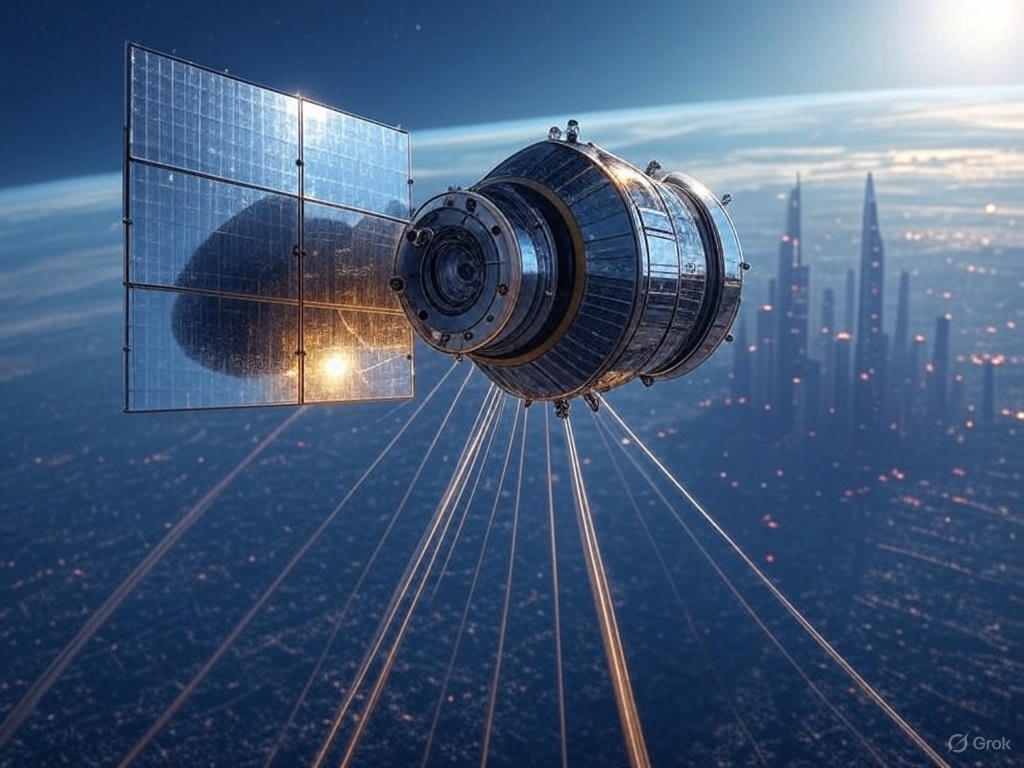
Implementing SBSP requires a sophisticated integration of technologies across several key areas:
Orbital Solar Arrays
Extremely large, lightweight solar panels positioned in orbit to maximize energy capture.
Power Conversion and Transmission
Systems that convert collected energy into electromagnetic waves (typically microwaves or infrared lasers) for long-distance beaming.
Ground-Based Rectennas
Specialized antenna arrays that receive the beamed energy and convert it back into electrical current.
Launch and Maintenance Systems
Reusable and cost-efficient launch vehicles are essential for deploying and maintaining orbital infrastructure.
Technological milestones in recent years including Caltech’s successful wireless power transmission experiment in orbit in 2023 have made real-world applications increasingly plausible. Research from the UK’s Space Energy Initiative (SEI) also suggests a functional multi-gigawatt SBSP system may be feasible within the 2035–2040 window.
Discover how next-gen battery chemistry accelerates clean mobility in sodium-ion batteries hybrid EVs.
Why Space-Based Solar Power Could Change Everything
Constant Solar Exposure
One of SBSP’s most compelling features is continuous solar exposure. Unlike ground-based systems affected by Earth’s rotation and weather, orbital systems sit in near-permanent sunlight dramatically increasing total energy output.
A Clean Energy Alternative
SBSP operations produce no greenhouse gases. When integrated with wind, terrestrial solar, and next-gen storage, it could support international climate targets and reduce the need for fossil fuel baseload generation.
Strategic Energy Supply & Grid Resilience
Because power is generated in orbit and beamed to the ground, SBSP:
- supports energy independence
- reduces reliance on geographically constrained supply sources
- enhances disaster readiness in regions vulnerable to grid failure
Can SBSP help stabilize national power grids?
Yes. Because it delivers consistent output, SBSP could serve as a “clean baseload” to complement intermittent renewables.
See how cloud–edge synergy will power future energy grids in edge computing and hybrid cloud integration.
Challenges and Considerations
Despite its immense potential, SBSP still faces major challenges:
High Capital Costs
Launching and assembling massive structures in orbit is expensive. However, reusable launch systems and private-sector competition are driving costs down.
Energy Transmission Efficiency
Microwave transmission must maintain high efficiency while minimizing atmospheric losses and avoiding interference with aviation or wildlife.
Orbital Debris & Long-Term Maintenance
Earth’s orbit is increasingly congested. Protecting SBSP arrays and ensuring safe long-term operation require advanced space traffic management.
Is microwave transmission safe for people and aircraft?
Yes, when properly regulated. SBSP beams are spread out, low-density, and designed with automatic shutoff systems if alignment drifts.
Global Momentum and Strategic Investments
Several countries and private companies are actively exploring SBSP development:
- China plans a one-megawatt orbital solar station by 2030.
- Japan’s JAXA continues to test microwave transmission for orbital systems.
- The European Space Agency has initiated research into SBSP through SOLARIS as part of its broader clean-energy and sustainability work.
- The US Department of Defense has SBSP pilots for remote power delivery.
Together, these developments signal that SBSP is shifting from speculation to serious infrastructure planning.
Related Topics for Deeper Insight
If you want to explore adjacent innovations shaping the future of energy, look into:
- next-gen terrestrial solar technologies
- grid-scale battery storage
- AI-driven grid optimization
- hydrogen and hybrid renewable infrastructure
- space manufacturing and orbital logistics
Conclusion
Space-based solar power is no longer just a theoretical concept from science fiction. With accelerating technological progress and rising geopolitical interest, SBSP may evolve into a vital component of the global energy ecosystem. It has the potential to deliver continuous, emission-free electricity at scales that could rival or exceed the largest renewable systems on Earth.
While major obstacles remain, especially cost and orbital safety, the vision of a sustainable, space-powered planet is closer to reality than ever. If SBSP succeeds, it could redefine humanity’s relationship with energy for generations to come.