Key Takeaways
- Quantum is moving toward practical business value through hybrid workflows (quantum + classical computing).
- Security teams can’t wait until post-quantum cryptography is already being standardized.
- The biggest near-term wins are in drug simulation, risk modeling, routing optimization, and materials science.
Quantum computing is transforming industries in 2026, and the big shift is this: it’s no longer just “cool science.” It’s becoming a serious competitive advantage for organizations solving problems that classical systems struggle with especially complex optimization, chemistry simulation, and next-generation security.Understand how blockchain networks scale securely through cross-chain interoperability.
What Is Quantum Computing?
Quantum computing uses qubits instead of normal binary bits. Unlike classical bits that are either 0 or 1, qubits can exist in multiple states at once (superposition) and influence each other (entanglement). That’s why quantum systems can accelerate certain categories of problems dramatically especially where variables explode beyond normal computing limits.
Quantum won’t replace your cloud, laptops, or servers. The winning pattern is hybrid computing where quantum acts like an accelerator for specific workloads, working alongside classical high-performance systems.
Healthcare: Faster Drug Discovery and Better Molecular Simulation
Healthcare is one of the most “quantum-ready” fields because biology and chemistry are fundamentally molecular.
In 2026, quantum’s promise here is not just speed it’s accuracy in simulation, helping researchers model molecular interactions that are extremely expensive to approximate classically. This can improve:
- drug candidate screening
- protein interaction simulation
- new material discovery for medical devices
Will quantum computers cure diseases soon?
Not directly but they can speed up the discovery pipeline, helping researchers test more possibilities faster and reduce expensive trial-and-error.
Explore emerging bio-digital systems in when biology meets technology living intelligence.
Finance: Smarter Risk Modeling and Portfolio Optimization
Finance lives on probability, complexity, and edge cases which is why quantum discussions keep coming back here.
In practical terms, quantum can improve:
- portfolio optimization with many constraints
- risk modeling across massive variable sets
- pattern-heavy fraud detection, especially when paired with AI
Is quantum trading real in 2026?
Some experimentation is real, but most organizations are still building quantum readiness and testing hybrid models rather than running entire trading systems on quantum.
Logistics: Supply Chain and Routing Optimization
Logistics is basically one giant optimization problem — and optimization is one of quantum’s strongest “early value” lanes.
In 2026, quantum-focused R&D and pilots are commonly aimed at:
- delivery route optimization in dynamic conditions
- warehouse picking and packing optimization
- inventory balancing across multi-node supply chains
Even small optimization improvements can translate into major cost savings at scale.
Cybersecurity: Quantum-Safe Systems Are Now a Business Priority
This is the part many sites explain vaguely your blog can stand out by being specific and current.
Quantum threatens today’s public-key encryption standards long-term, which is why governments and security organizations are already moving toward post-quantum cryptography.
In fact, NIST approved three post-quantum cryptography standards (FIPS 203, 204, 205) designed to resist future quantum attacks.
Do companies need to migrate to quantum-safe security now?
If you manage long-life sensitive data (finance, identity, healthcare, government, infrastructure), you should begin planning now because crypto transitions take time, and “harvest now, decrypt later” is a real concern in security strategy.
Energy: Grid Optimization and Better Battery Chemistry
Energy systems are complex, variable-heavy networks. Quantum approaches are attractive for:
- grid load balancing and demand forecasting
- battery chemistry simulation (materials discovery)
- renewable energy optimization and efficiency modeling
The near-term story is less about “quantum runs the grid,” and more about quantum helping researchers and engineers model better systems.
Manufacturing: Materials Discovery and Smarter Design
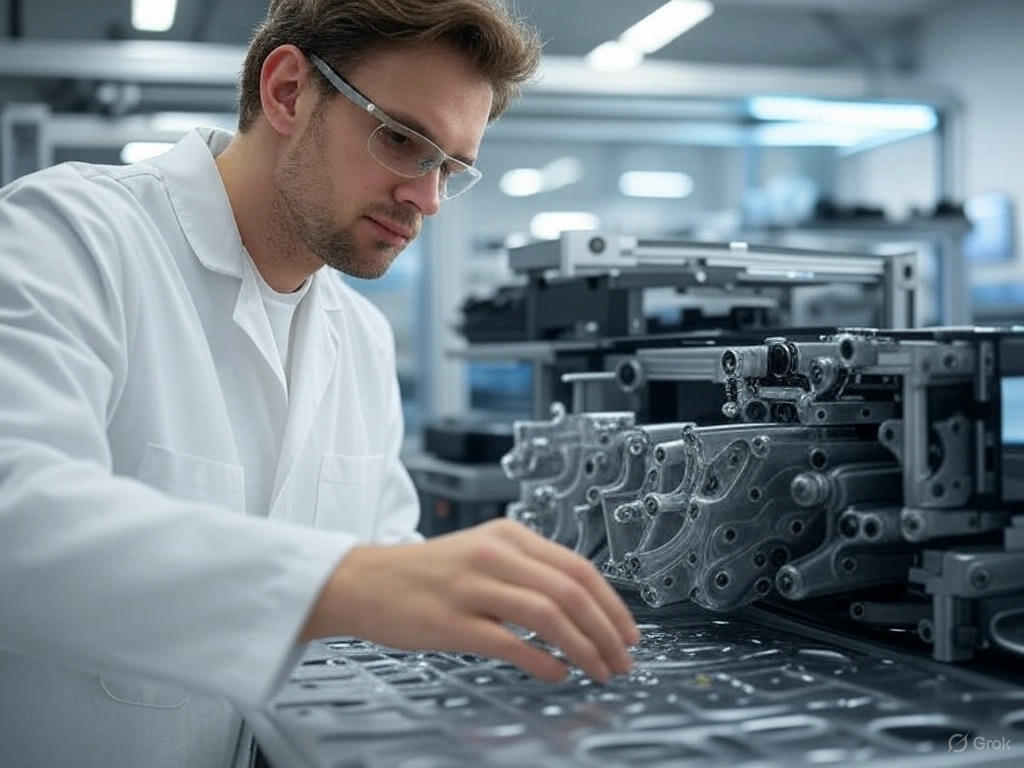
Manufacturing benefits when you can simulate materials and processes more precisely.
In 2026, the strongest quantum opportunities in manufacturing include:
- material discovery (lighter, stronger, more heat-resistant)
- improved simulation for product design
- optimization of production scheduling under constraints
Challenges on the Horizon
Quantum is powerful but it’s still hard.
Key blockers remain:
- hardware stability and error rates
- scaling qubits reliably
- cost and specialized talent
But the trajectory is clear: the industry is actively mapping the path to fault-tolerant quantum computing, including roadmaps targeting large-scale systems with logical qubits and massive gate counts.
The Quantum Future in 2026: What Businesses Should Do Now
The smartest move isn’t “buy quantum.” It prepares your organization to use it when it becomes a clear advantage.
A practical 2026 readiness checklist
- Identify 1–2 high-impact problems (optimization, simulation, security planning)
- Build small internal capability (even a single “quantum lead” makes a difference)
- Test hybrid approaches (quantum + classical workflows)
- Start a post-quantum cryptography migration plan (especially for long-life data)
Quantum computing is transforming industries in 2026 not because it’s everywhere, but because it’s finally entering the stage where early movers can build capability, protect security foundations, and be ready when advantage becomes mainstream.