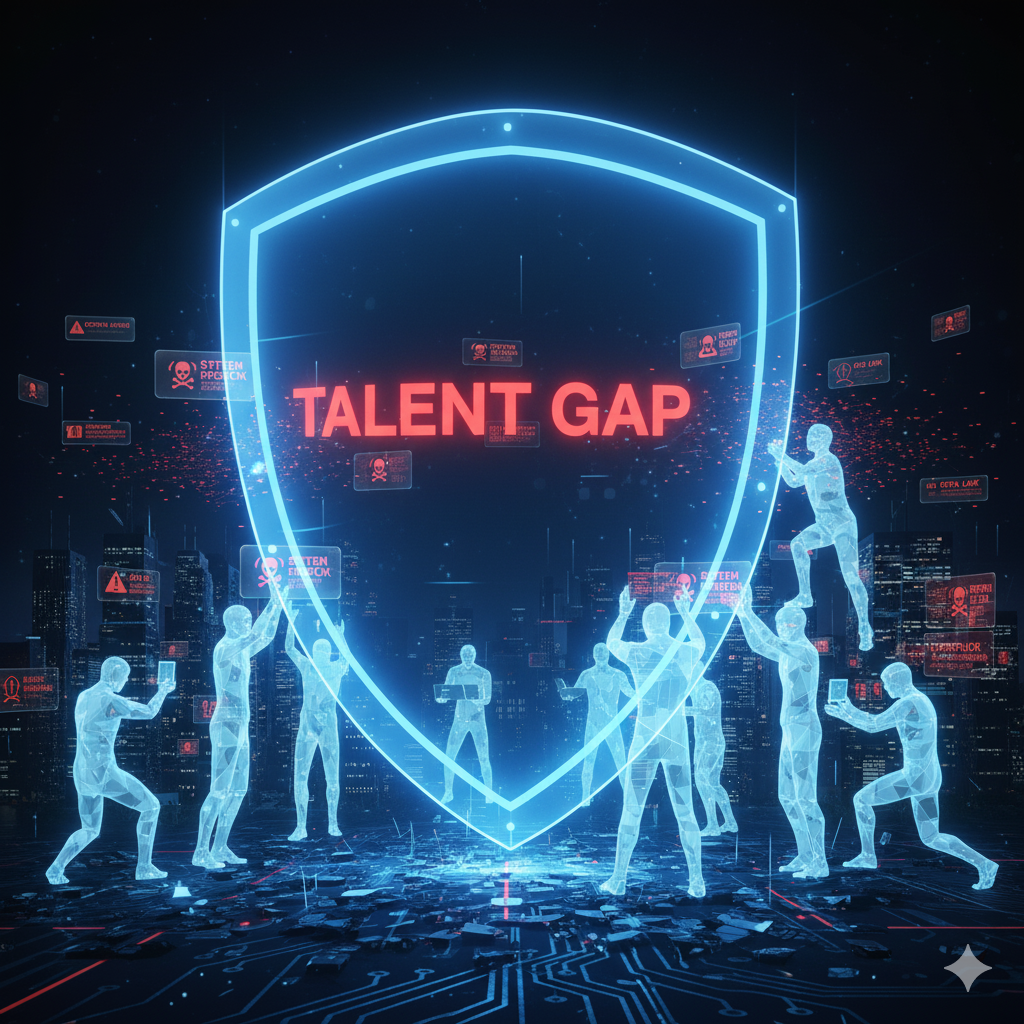
The cybersecurity skills gap is the growing mismatch between the demand for cyber talent and the number of professionals available to fill those roles. This shortage leaves businesses exposed to ransomware, fraud, and state-sponsored attacks, especially as digital transformation accelerates.
This article explains the rise, causes, impacts, driving forces, challenges, critical perspectives, and future strategies to address the cybersecurity skills gap, with updated 2026 insights for practical action.
Quick key takeaways
- The gap is no longer just hiring, it is also a skills maturity problem inside teams
- 2026 demand is highest for cloud, identity, incident response, and AI security skills
- The fastest improvement comes from structured training plus automation, not hiring alone
What is the cybersecurity skills gap
It is the shortage of skilled cybersecurity professionals compared to how many people organizations need to stay secure.
The Rise of the Cybersecurity Skills Gap
The cybersecurity skills gap has grown exponentially, with over 4 million unfilled positions globally by 2025, according to industry reports. This trend emerged as cyber threats proliferated—ransomware attacks increased 93% in 2024—and organizations digitized operations. The gap is exacerbated by the retirement of experienced professionals and the rapid evolution of threats, requiring skills in AI-driven defense and cloud security, areas where talent is scarce.
ISC2’s 2024 workforce study estimates the global cybersecurity workforce at about 5.47 million, while the workforce gap is about 4.76 million, showing how large the shortage still is at scale.
Is the cybersecurity gap real or hype
It is real. Workforce studies consistently show millions of roles worth of unmet security need globally.
Causes and Key Factors
The gap stems from several root causes. Educational systems lag in producing graduates with practical cybersecurity skills, focusing on theory over hands-on training. The field’s complexity, requiring knowledge in networking, cryptography, and ethics, deters entry. High burnout rates, with 45% of professionals reporting stress, lead to attrition.
Additionally, the gender and diversity imbalance—women represent only 25% of the workforce—limits the talent pool, a structural issue often ignored in recruitment strategies.
ISC2 also highlights that budget pressure and limited resourcing are now a major reason organizations stay understaffed, even when demand is high.
When teams are stretched, zero trust architecture zta adoption helps reduce exposure by design and limits blast radius.
Impacts Across Industries
The skills gap has far-reaching consequences:
- Small businesses: lacking resources, are hit hardest, with 60% unable to recover from breaches
- Healthcare: faces increased breaches, with 2024 seeing 2,200 incidents in the U.S. alone, compromising patient data
- Finance: suffers losses from fraud
- Manufacturing: deals with supply chain disruptions
These risks are amplified in supply chains, as explored in our article on regulatory focus on supply chain cybersecurity, which examines resilience strategies.
- Governments: risk national security, as seen in recent state attacks
Why does the skills gap cause more breaches?
Because security teams cannot monitor, patch, investigate, and respond fast enough when workloads exceed capacity.
Driving Forces Behind the Gap
Several factors fuel the gap. The proliferation of IoT devices—75 billion by 2025—creates more attack surfaces, demanding specialized skills. Regulatory pressures, like GDPR and NIS2, require compliance experts, straining supply. The shift to remote work expands vulnerabilities, while AI’s dual role as tool and threat necessitates new expertise. Economic growth in emerging markets increases demand, but education systems haven’t kept pace, perpetuating the imbalance.
In 2026, AI is increasing both cyber risk and cyber complexity, which means teams now need hybrid skills across security operations, cloud identity, and AI governance to stay ahead.

Challenges and Ethical Concerns
Addressing the gap faces hurdles. Training programs are costly, excluding underrepresented groups and widening inequality. The fast-paced threat landscape makes skills obsolete quickly, requiring continuous learning. Ethical issues arise from overworked professionals making errors, potentially compromising data privacy. The environmental impact of expanded data centers for security tools is often downplayed, contradicting sustainability goals.
Training matters most where humans are targeted, bec scams investment fraud cybercrime 2024 shows why awareness is still essential.
A Critical Perspective
The establishment narrative frames the skills gap as a solvable talent shortage, promoting upskilling and diversity initiatives. However, this optimism masks systemic flaws. Educational systems prioritize outdated curricula, failing to adapt to real-world needs, while industry demands high experience for entry-level roles, creating a cycle of exclusion. The focus on diversity is superficial, with women and minorities facing bias, as 30% report discrimination.
The gap’s economic impact is understated, with breaches costing $4.5 trillion in 2024, and the narrative ignores how underfunded public education perpetuates inequality. True resolution requires structural reforms beyond corporate training programs.
What is the biggest hidden reason the skills gap stays
Many “entry-level” jobs still demand advanced experience, which blocks new talent from entering the industry.
The Future of Addressing the Skills Gap
The future holds promise, with the market for cybersecurity training projected to reach $10 billion by 2027. By 2026, AI-assisted learning could accelerate skill acquisition, while partnerships between tech firms and universities may bridge gaps. Success depends on inclusive initiatives, regulatory incentives for diversity, and sustainable practices. Innovations like gamified training and apprenticeships could resolve barriers, but equitable access remains key.
The most effective organizations are shifting from one-time hiring to continuous skill-building, using internal labs, rotations, and certifications to keep teams updated without burning them out.
Broader Implications and Industry Shifts
This gap influences tech development, pushing for automated tools and AI defenses to compensate for human shortages. It challenges traditional hiring, fostering remote and global talent pools, but also raises regulatory stakes for compliance. Developers must prioritize user-friendly security, while policymakers craft incentives for education. The interplay of technology, workforce, and policy will shape cybersecurity’s trajectory in 2025 and beyond.
TechyKnow note: If you are building your cybersecurity team in 2026, focus on training pipelines and role-based learning plans before expanding tools. The strongest security teams grow skill depth first, not tool count.