

Deepfakes Cybersecurity are no longer just a social media issue. They are now a real cybersecurity threat that can trigger fraud, data leaks, and financial loss. This updated guide explains what deepfakes are, why they work, and what smart defenses look like in 2026.
The Rise of AI-Generated Deepfakes in Cybercrime
Deepfakes have evolved into a serious cybersecurity threat, fueled by rapid advancements in generative AI. Deloitte has highlighted deepfake disruption as a growing trust and security challenge as synthetic media becomes easier to create and harder to verify.
Cybercriminals now use deepfakes to impersonate executives in video calls, trick employees into transferring funds, or pressure teams into sharing sensitive access details. One widely reported real-world example involved fraudsters using a deepfake video conference to convince staff to transfer more than 25 million dollars in fraudulent payments.
Key takeaways (quick facts inside the story)
- Deepfake scams work because they attack human trust, not only systems
- Video and voice impersonation is now being used for finance and access fraud
- 2026 defense means verification rules, not relying on recognition alone
What is a deepfake in cybersecurity terms
A deepfake is AI-generated fake video, audio, or imagery used to impersonate a real person and manipulate victims into giving money, access, or confidential information.
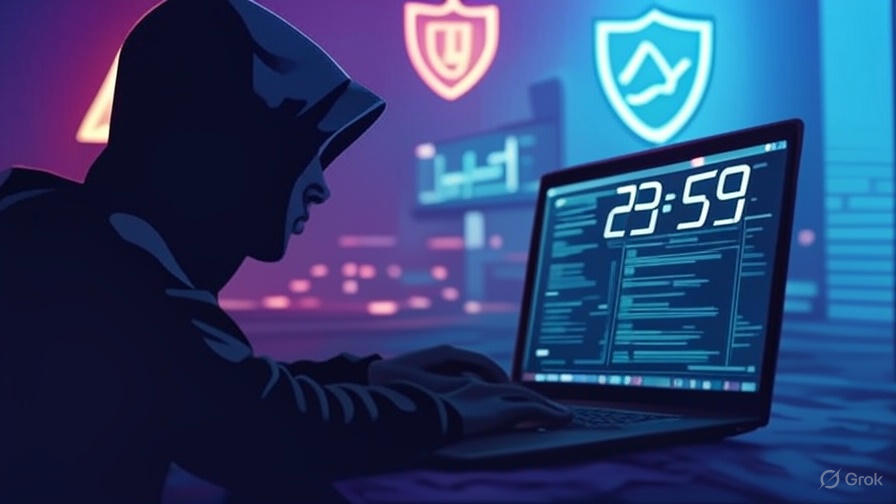
How Deepfakes Exploit Cybersecurity Vulnerabilities
The cybersecurity implications of AI-generated deepfakes are broad because they exploit both technology and human behavior at the same time. Deepfakes can bypass traditional security checks by mimicking faces, voices, and communication style. This is especially risky for voice verification systems and remote identity workflows.
Deepfakes also amplify phishing and impersonation. A believable fake video of a trusted manager or IT admin can push employees into clicking malicious links, approving urgent payments, or resetting credentials without proper checks.
The bigger problem is long-term trust damage. Once deepfakes become common, teams start questioning what is real, which slows response time and creates confusion during actual incidents.
Deepfakes are now being used as malware traps too, the fake ai video malware 2025 case shows how quickly this is evolving.
Why are deepfakes so effective against businesses
Because they create urgency and authority, making people act quickly before verifying, especially in finance, HR, and IT workflows.
Detection Challenges in 2026
Detecting AI-generated deepfakes remains a major challenge because realism is improving faster than most organizations can adapt. Some detection tools look for anomalies like odd facial movement, mismatched blinking, inconsistent lighting, or unnatural audio timing. But attackers constantly evolve models to bypass these checks.
This is why defenders should treat deepfake detection as a layered strategy, not a single tool solution. Even when AI detection improves, smaller organizations often lack access to enterprise-grade monitoring, making them easier targets.
The FBI has warned that cybercriminals are increasingly using AI generated voice and video to enable fraud schemes against both individuals and businesses.
Can deepfake detection tools guarantee 100 percent accuracy
No. The safest approach is combining detection tools with strict verification steps for payments and account changes.
What Deepfake Attacks Look Like in Real Life
Deepfake attacks usually follow familiar scam patterns, but they feel more convincing because the victim sees or hears a trusted face or voice.
Common deepfake attack scenarios include:
- A fake executive on a video call requesting urgent wire transfers
- A fake recruiter pushing a target to “verify identity” using personal documents
- A cloned voice calling IT support to reset multi-factor authentication
- A fake customer asking for account access changes or password overrides
In many cases, the deepfake is only one piece of the attack. Criminals often combine it with spoofed email addresses, fake meeting links, and real leaked data to make the interaction feel authentic.
How to Reduce Deepfake Risk in 2026
The most effective deepfake defense in 2026 is simple. Stop treating recognition as verification.
Here are the best 2026 practices that reduce deepfake cyber risk quickly:
- Require call-back verification for payments and account changes
- Use two-person approval for high-value transfers
- Create a secure internal code phrase for urgent finance requests
- Limit what executives share publicly that could train voice cloning
- Enable strong MFA and protect recovery methods for email accounts
- Train teams to slow down and verify before acting
If your process allows “video confirmation” to replace verification, deepfakes will eventually break it.
Deepfake Cybersecurity deception links closely to fraud tactics, bec scams investment fraud cybercrime 2024 explains how social engineering drives losses.
Final Thoughts
Deepfakes are no longer a future threat. They are already being used in real fraud cases, and the risk is rising as AI tools become cheaper and more accessible.
In 2026, the organizations that stay safest will not be the ones with the most tools, but the ones with the clearest verification systems, the strongest payment controls, and teams trained to pause before trusting what they see.
For more cybersecurity updates and practical defenses, keep following TechyKnow.





[…] distrust. These privacy risks also extend to cybersecurity threats, as explored in our article on cybersecurity implications of AI-generated deepfakes, which examines AI’s role in digital vulnerabilities. Accuracy remains a concern, as sensor […]