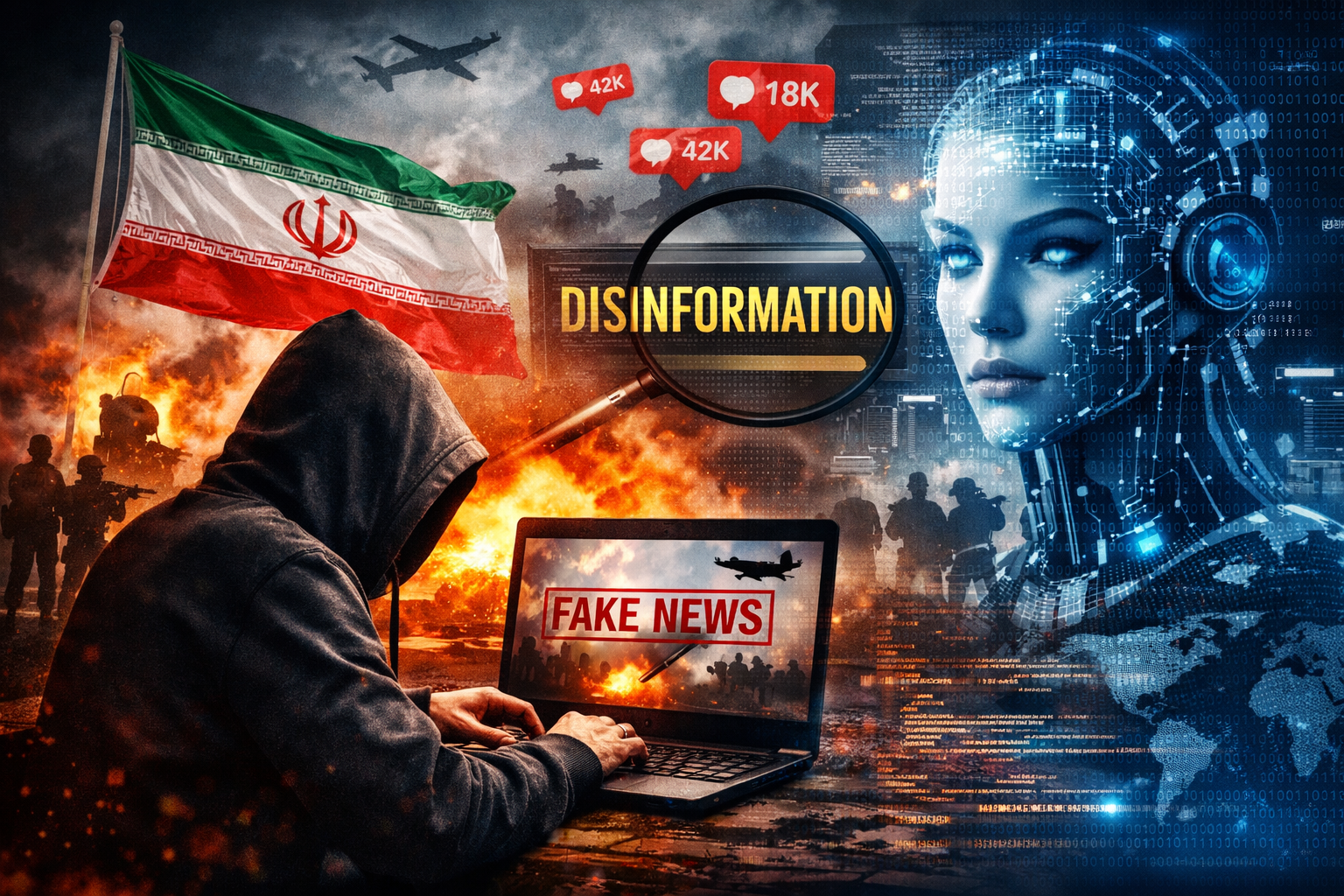
Iran AI Disinformation Campaign operations are increasingly being identified as a major cybersecurity and information warfare threat, with researchers uncovering coordinated networks spreading AI-generated propaganda across global social media platforms.
Investigations by cybersecurity researchers and media organizations reveal that Iranian-linked networks have been using artificial intelligence tools to create fake war images, misleading narratives, and fabricated battlefield footage during the Iran-Israel conflict. These campaigns aim to manipulate public opinion and shape global perception of the conflict.
According to researchers, the scale and sophistication of these operations demonstrate how AI is rapidly transforming digital propaganda and cyber-enabled information warfare.
Key Takeaways
- Iran AI Disinformation Campaign involves coordinated fake social media personas spreading propaganda.
- AI-generated war images and manipulated videos were widely shared online during the conflict.
- Researchers identified dozens of accounts pretending to be users from the UK and Ireland.
- Some viral fake war videos reached millions of views before being removed.
- Cybersecurity experts warn that AI tools are accelerating global information warfare.
- Governments and technology companies are struggling to detect AI-generated propaganda quickly.
How the Iran AI Disinformation Campaign Operates
The Iran AI Disinformation Campaign relies on a combination of fake online identities, artificial intelligence content generation, and coordinated posting strategies across major social media platforms.
Researchers from Clemson University identified at least 34 accounts linked to Iranian influence operations that posed as ordinary Western users online. These profiles claimed to be British or Irish citizens and posted about local political topics before shifting to pro-Iran war messaging once tensions escalated.
The accounts distributed:
- AI-generated battlefield images
- manipulated war footage
- false claims about attacks on Israeli or US targets
- coordinated political narratives
Many posts appeared authentic because they were written in fluent English and included images designed to look like real conflict footage.
According to analysis of the campaign, one widely shared fake video claiming to show a missile strike gained more than 23 million views before researchers identified it as footage from a video game simulation.
Why AI Makes Disinformation More Powerful
Artificial intelligence tools are enabling propaganda campaigns to operate at unprecedented scale and speed.
Traditional propaganda campaigns required human editors and content creators. AI systems can now automatically generate realistic content such as:
- synthetic battlefield imagery
- AI-generated speeches or audio clips
- manipulated political narratives
- thousands of coordinated social media posts
This automation allows misinformation to spread far faster than fact-checking systems can respond.
Experts say this transformation is turning disinformation into a powerful cyber weapon capable of influencing elections, shaping international narratives, and destabilizing societies.The growing role of AI in cybersecurity risks is also expanding digital attack surfaces, particularly as new technologies create more opportunities for exploitation. A detailed analysis of this trend can be found in TechyKnow’s coverage of AI-driven attack surfaces in modern browsers.
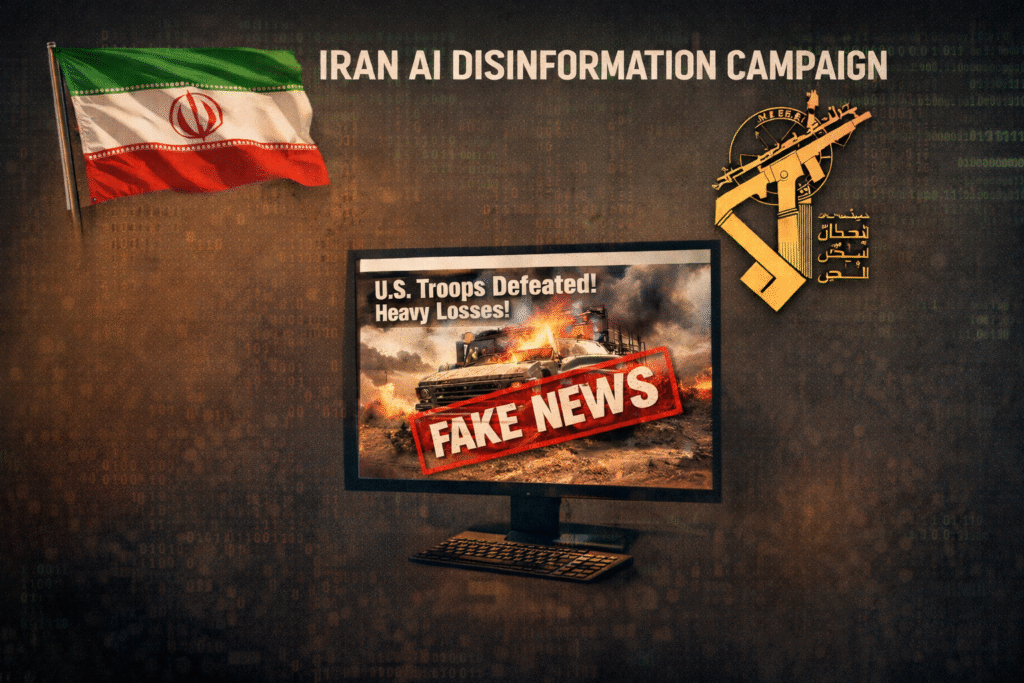
Iran AI Disinformation Campaign and Information Warfare
The Iran AI Disinformation Campaign highlights how modern conflicts increasingly involve digital influence operations alongside traditional warfare. Researchers observed that many posts within the campaign were strategically designed to reinforce pro-Iran narratives and amplify criticism of Western governments or Israel.
In some cases, the accounts reused old footage or AI-generated images while presenting them as real-time war developments. These tactics can create confusion among global audiences and lead to rapid misinformation spread. The strategy is part of a broader trend known as information warfare, where governments or state-linked actors attempt to manipulate public perception rather than directly attacking digital infrastructure.
According to cybersecurity researchers, disinformation attacks are defined as deliberate attempts to spread misleading or fabricated information to influence political outcomes or public opinion.
Can ordinary social media users be affected by the Iran AI Disinformation Campaign?
Yes. Most users encounter these campaigns indirectly through viral posts shared across social media platforms. Because the content often appears realistic, users may unknowingly spread misinformation by reposting or engaging with manipulated images and videos.
Cybersecurity experts recommend verifying suspicious war footage through trusted news organizations before sharing it online.
Social Media Platforms Struggle to Contain AI Propaganda
Major social media platforms face increasing pressure to detect and remove AI-generated misinformation.
However, AI-driven propaganda campaigns often spread faster than moderation systems can respond. By the time fake content is identified and removed, it may have already reached millions of users.
Researchers say the problem is especially severe during geopolitical conflicts, when public interest in breaking news is high and unverified information spreads rapidly.
Cybersecurity experts warn that without improved detection tools, AI-generated propaganda could significantly undermine public trust in digital information ecosystems.Recent cyber incidents show how vulnerable digital systems can be to coordinated disruptions. For example, the Stryker cyberattack global outage demonstrated how quickly digital incidents can affect global operations and infrastructure.
How can cybersecurity experts detect AI disinformation campaigns?
Cybersecurity teams typically analyze patterns such as coordinated posting behavior, repeated narratives across multiple accounts, and metadata from images or videos. Advanced AI detection tools can also identify synthetic media generated by machine learning systems.
Despite these tools, experts say human investigation and digital forensics remain essential for uncovering sophisticated disinformation networks.
The Future of AI-Driven Disinformation
The Iran AI Disinformation Campaign is likely just one example of a broader shift toward AI-powered influence operations in global conflicts.
Security analysts believe future campaigns could include:
- advanced deepfake political speeches
- automated propaganda targeting specific demographics
- AI-generated news reports designed to mimic legitimate journalism
- large-scale bot networks amplifying manipulated narratives
As artificial intelligence becomes more powerful and accessible, the ability to produce convincing fake content will continue to improve.
Experts say defending against this threat will require collaboration between governments, technology companies, cybersecurity researchers, and independent fact-checking organizations.
Ultimately, the rise of AI-driven propaganda means cybersecurity is no longer just about protecting systems and networks, it is also about protecting truth and public trust in information.