Key Takeaways
- Elon Musk emphasized that “nobody committed suicide because of Grok”, contrasting it with lawsuits referencing ChatGPT.
- OpenAI faces legal scrutiny over safety, transparency, and its transition from nonprofit to for-profit.
- The deposition adds fuel to ongoing debates regarding AI accountability, model behavior, and real-world harm.
- Industry observers expect regulatory bodies to respond more aggressively following Musk’s statements.
- Safety discussions around Grok also reference earlier controversies, including misinformation and moderation gaps.
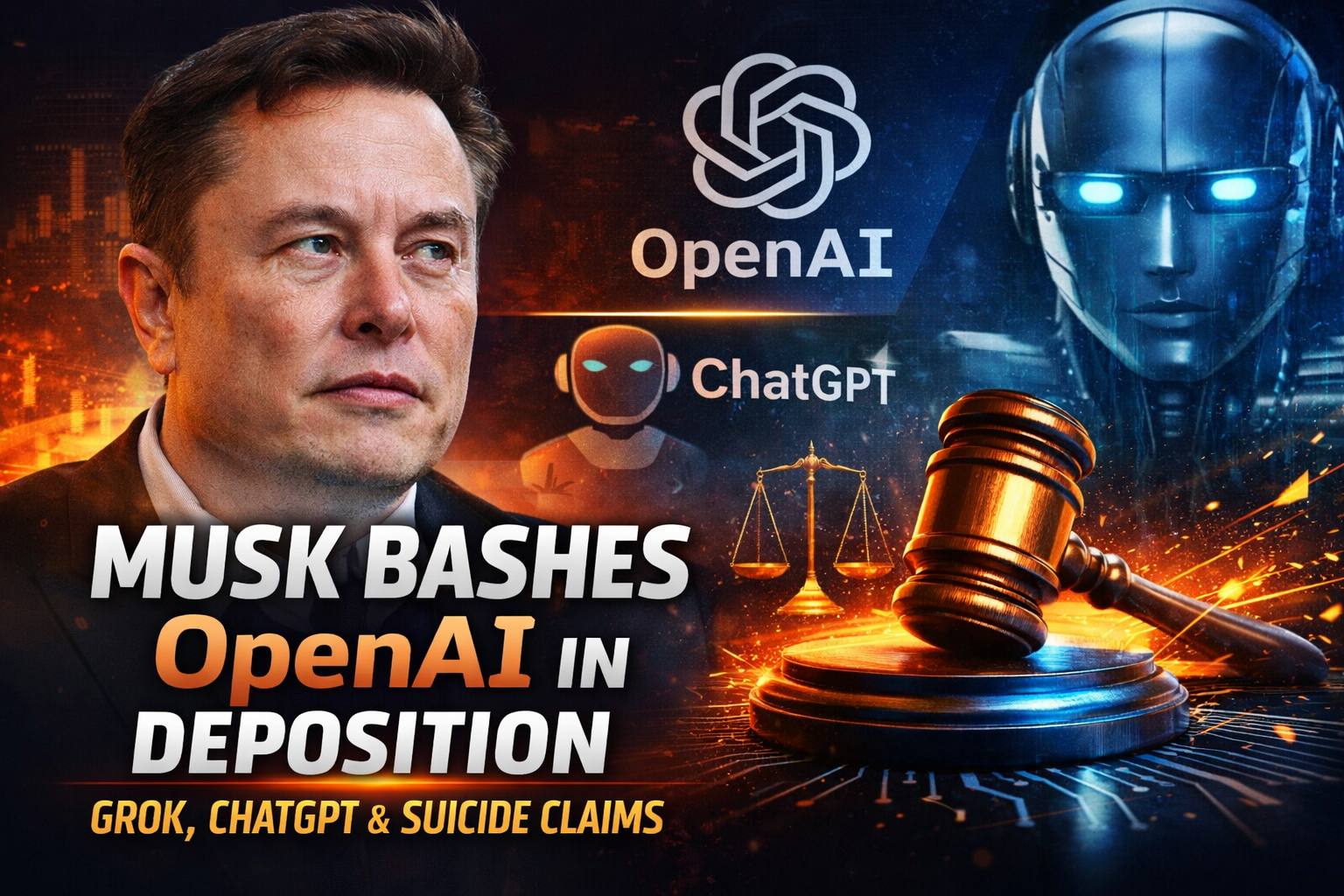
The controversy intensified this week as Musk bashes OpenAI in deposition over Grok, ChatGPT, making strong claims about the safety of his company’s AI model. In the newly released testimony, Musk asserted that no suicide cases have been linked to Grok, while referencing lawsuits claiming that ChatGPT contributed to harmful user outcomes. Although courts have not legally validated such causal connections, the claims have placed OpenAI under heightened scrutiny.
This deposition stems from a lawsuit where Musk accuses OpenAI of abandoning its original nonprofit mission and prioritizing commercialization over safety. He positions xAI’s Grok as a more secure alternative, emphasizing differences in model design, transparency, and intended usage.
Musk bashes OpenAI in deposition over Grok, ChatGPT: What Sparked the Dispute?
The legal clash goes deeper than a few sharp remarks. Musk’s testimony reveals several layers to the conflict:
- He claims OpenAI’s leadership deviated from its founding ethos, which he says focused on open, safe AI development.
- He argues that safety risks were exacerbated by commercial pressures, particularly after Microsoft invested heavily in OpenAI.
- He frames xAI’s philosophy as a “safety-first” approach, insisting Grok’s design undergoes stricter behavioral oversight.
Interestingly, while defending Grok’s record, Musk acknowledged earlier public criticisms about Grok producing unsafe, offensive, or biased outputs, controversies well documented during its launch year. These issues pushed several countries to review or even temporarily restrict the model’s use. To add context for your readers, linking to one of our existing blogs makes the narrative stronger. For example, Grok’s earlier issues are explored further in your own article on the Grok AI scandal
Musk bashes OpenAI in deposition over Grok, ChatGPT: The Safety Debate Intensifies
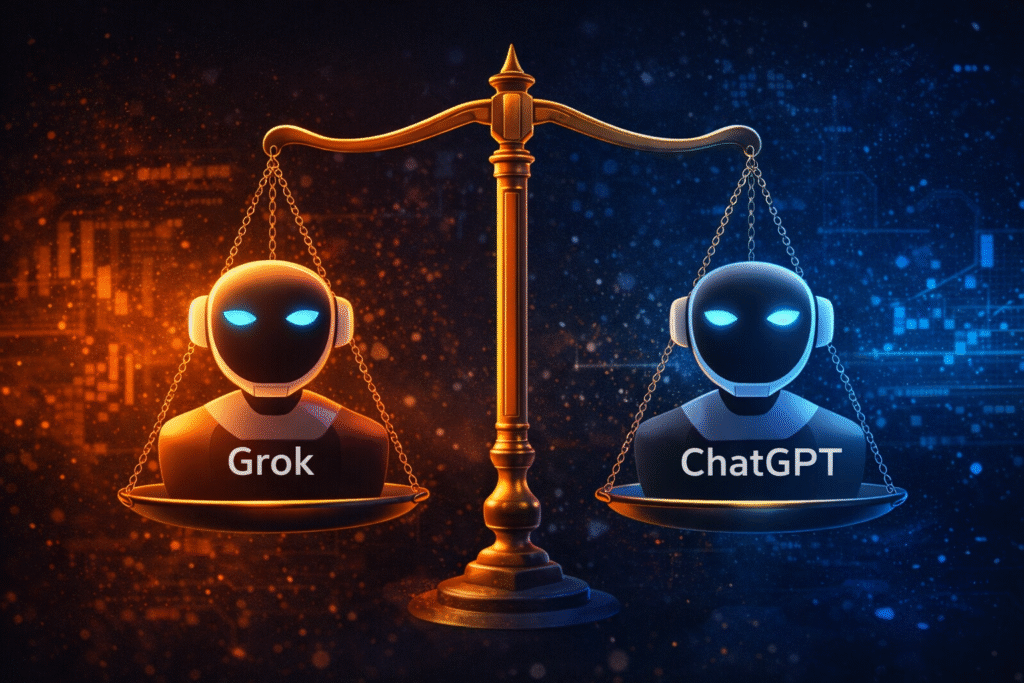
Musk’s claim “nobody committed suicide because of Grok”—was positioned as a comparison to allegations raised in lawsuits tied to ChatGPT usage. These lawsuits, including the well-known Raine v. OpenAI filing, allege that ChatGPT responses may have contributed to harmful mental health outcomes.
However, it’s critical to clarify courts have not established causation, only that legal complaints have been filed.
Does Musk’s statement legally prove Grok is safer?
No. Musk’s deposition reflects his legal strategy, not a verified safety audit. No independent body has confirmed Grok’s comparative safety. OpenAI continues to argue that ChatGPT includes robust safety layers and crisis-intervention protocols.
These distinctions matter, especially as regulators globally discuss mandating safety baselines for AI systems.
Wider Implications of Musk’s Deposition
The deposition comes at a time when policymakers and the public are increasingly questioning AI accountability:
- EU regulators recently increased scrutiny on AI models, especially those integrated into social platforms.
- U.S. lawmakers continue debating whether AI firms should be legally responsible for model-generated harms.
- AI researchers globally emphasize transparent behavior logs and audit trails for large AI systems.
Amid these debates, Musk’s statements serve as a high-profile catalyst. The contrast he draws between Grok and ChatGPT forces renewed conversations about how safety should be measured and who should be legally accountable. The article on publicly exposed APIS risks in AI systems provides a strong complementary reference for readers wanting deeper insights into systemic vulnerabilities.
Examining Musk’s Legal Strategy
The lawsuit Musk filed seeks more than financial remedy it aims to position OpenAI as an entity that violated its founding mission. According to Musk:
- OpenAI’s transformation from nonprofit to capped-profit contradicted promises made during its founding.
- The integration of OpenAI technology into commercial products like Microsoft Copilot underscores this shift.
- xAI’s Grok is portrayed as staying aligned with the “open and safe AI for humanity” principle.
Industry analysts suggest the deposition also functions strategically reinforcing xAI’s branding as a safety-driven alternative to existing AI tools.
Industry and Expert Reactions
Reactions to Musk’s deposition have been mixed:
- AI safety researchers highlight that both Grok and ChatGPT have exhibited problematic outputs historically, a common issue among LLMs.
- Legal scholars argue that establishing causation in AI-linked harm will remain extremely difficult.
- Tech analysts point out Musk’s interest in differentiating Grok as competition tightens between xAI and OpenAI.
One noteworthy point raised by experts is that Grok also faced criticism for unfiltered responses, including misinformation bursts, which regulatory bodies flagged early on.
This context adds nuance to Musk’s claims about Grok’s safety track record.
Is ChatGPT legally responsible for harmful user outcomes?
Currently, no court has ruled that ChatGPT directly caused suicide or severe harm. Lawsuits allege contributing factors, but legal responsibility for AI-generated content is still developing. Regulatory frameworks are being drafted globally.
What This Means for AI Users and Developers
The statement Musk bashes OpenAI in deposition over Grok, ChatGPT is more than a headline it signals an era where:
- AI model developers may face increased legal accountability.
- Safety protocols may become mandatory, not optional.
- Public trust could hinge on transparent reporting and audits.
- Lawsuits may determine future industry standards for harm mitigation.
Generative AI is moving beyond technological innovation into ethics, law, and public responsibility.
Final Thoughts
As the trial date approaches, the industry is watching closely. Musk’s deposition raises critical questions about transparency, safety verification, and the responsibilities of AI creators. Whether or not courts accept Musk’s claims, the debate he sparked could shape policy, development practices, and user expectations for years ahead.