Key Takeaways from NVIDIA GTC 2026
- NVIDIA GTC 2026 will bring together developers, researchers, and tech leaders to showcase the next phase of the AI revolution.
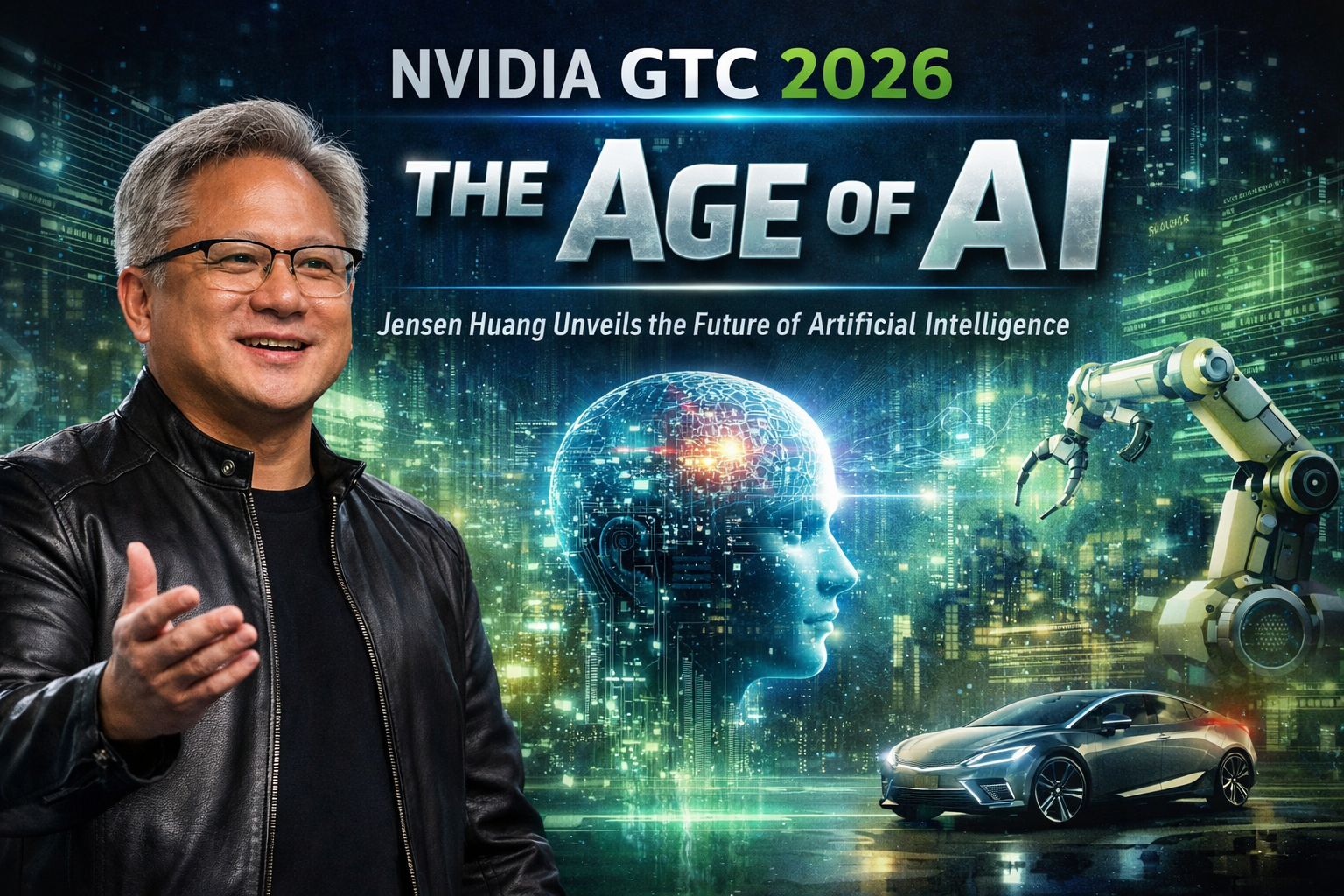
- NVIDIA CEO Jensen Huang will present a keynote focused on the “Age of AI” and accelerated computing.
- The event will explore breakthroughs in generative AI, robotics, digital twins, and high-performance computing.
- Thousands of developers will attend technical sessions covering AI model development and GPU-powered computing.
- Enterprises will gain insights into AI deployment, cloud infrastructure, and future AI platforms.
NVIDIA GTC 2026 Signals the Beginning of the Age of AI
NVIDIA GTC 2026 is shaping up to be one of the most important technology events of the year, bringing together industry leaders to discuss the next chapter of artificial intelligence innovation. The GPU Technology Conference, hosted annually by NVIDIA, has evolved into a major platform where groundbreaking advancements in AI computing are announced.
According to the official NVIDIA announcement, CEO Jensen Huang will headline the conference with a keynote exploring how AI is transforming industries and creating a new computing paradigm. The event will feature global technology leaders who will demonstrate the practical applications of AI across sectors such as healthcare, robotics, manufacturing, and enterprise software.
Unlike traditional tech conferences, NVIDIA GTC 2026 focuses heavily on the infrastructure powering artificial intelligence. As AI adoption accelerates worldwide, the demand for high-performance GPUs, machine learning frameworks, and AI development platforms continues to grow.
How NVIDIA GTC 2026 Is Driving AI Infrastructure Innovation
One of the central themes of NVIDIA GTC 2026 is the rapid evolution of AI infrastructure. Modern artificial intelligence systems require enormous computing power to train and run advanced models, and NVIDIA’s accelerated computing technology has become essential for this process.
AI Supercomputing and Accelerated Computing
Accelerated computing replaces traditional CPU-based systems with GPU-powered platforms capable of handling massive AI workloads. This approach allows companies to train large-scale machine learning models significantly faster.
Jensen Huang has repeatedly emphasized that accelerated computing is the foundation of the next industrial revolution powered by artificial intelligence.
Recent industry data also supports this claim. A report by McKinsey estimates that generative AI could contribute up to $4.4 trillion annually to the global economy, highlighting the massive economic potential of AI technologies.
At NVIDIA GTC 2026, experts are expected to discuss how new GPU architectures, AI frameworks, and cloud computing integrations are enabling organizations to scale their AI capabilities faster than ever before.
Digital Twins and Industrial AI
Another major area of focus at NVIDIA GTC 2026 is digital twin technology. Digital twins allow companies to simulate real-world environments using AI-powered models. These virtual environments help engineers test designs, optimize operations, and predict potential failures.
For example, manufacturers can create digital replicas of factories to analyze production workflows and improve efficiency. Cities can simulate traffic patterns, energy systems, and infrastructure planning using AI-driven models.
These innovations are becoming increasingly important as organizations adopt AI-powered decision-making systems.
NVIDIA GTC 2026 and the Expanding AI Ecosystem
Artificial intelligence is no longer limited to research labs. Today, it plays a crucial role in cloud services, enterprise software, consumer applications, and robotics.
NVIDIA GTC 2026 will highlight how AI ecosystems are expanding through collaboration between hardware providers, software developers, and technology companies.
Some of the key technologies expected to be discussed include:
- Large Language Models (LLMs)
- Robotics simulation platforms
- AI-driven healthcare diagnostics
- Autonomous vehicle computing systems
- Enterprise AI deployment tools
The rapid growth of AI platforms has also intensified competition among major tech companies. Industry debates around AI development and governance continue to gain attention, as seen in the ongoing dispute involving Elon Musk and OpenAI discussed here: Musk bashes Open AI deposition over grok Chatgpt
The Role of Developers at NVIDIA GTC 2026
A significant portion of NVIDIA GTC 2026 is dedicated to developers and engineers who build the tools that power AI applications.
The conference typically features hundreds of sessions where developers can learn about:
- AI model optimization techniques
- GPU programming frameworks
- Robotics and simulation environments
- AI deployment pipelines
These sessions provide practical knowledge for developers working on real-world AI projects.Another growing trend expected to be discussed is the rise of multi-model AI systems, where different AI models collaborate to solve complex tasks. This approach is gaining popularity among AI platforms and research labs. More insights into this trend can be found in this analysis of multi-AI systems: Perplexity Computer Multi AI Model
What Makes NVIDIA GTC 2026 Unique in the Tech Industry
Unlike consumer-focused tech events, NVIDIA GTC 2026 is centered around the deep technological infrastructure behind artificial intelligence. The conference combines research insights, enterprise innovation, and developer education into a single global platform.
In previous years, NVIDIA used GTC to introduce technologies that significantly impacted the AI industry, including:
- CUDA programming architecture
- DGX AI supercomputing systems
- Omniverse digital twin platform
Each of these technologies has played a major role in accelerating AI development.
A quick question many readers ask is whether GTC mainly targets developers. While developers form a large part of the audience, enterprises, startups, and AI researchers also participate because the technologies unveiled often influence the entire AI ecosystem.
Jensen Huang’s Vision for the Future of AI
During the keynote at NVIDIA GTC 2026, Jensen Huang is expected to discuss how artificial intelligence will shape the next decade of technological innovation.
According to Huang, the world is entering an era where AI becomes the core infrastructure of modern computing. From healthcare diagnostics to autonomous vehicles, AI-powered systems are rapidly transforming industries.
Some sectors expected to see the biggest impact include:
- Healthcare and drug discovery
- Climate and environmental modeling
- Financial analytics and risk prediction
- Robotics and manufacturing automation
Another common question surrounding NVIDIA GTC 2026 is whether the conference will reveal new AI products. While NVIDIA has not confirmed specific announcements yet, GTC events traditionally feature major product launches and platform updates.
Why NVIDIA GTC 2026 Matters for the Future of AI
The importance of NVIDIA GTC 2026 extends beyond the announcements made during the event. The conference represents a broader shift toward AI-driven computing as the backbone of modern technology.
As organizations worldwide invest heavily in machine learning, automation, and AI infrastructure, the technologies introduced at GTC often influence how companies build and deploy AI systems.
With developers, researchers, and industry leaders participating from across the globe, NVIDIA GTC 2026 is expected to provide valuable insights into the future of artificial intelligence and the next generation of computing innovation.
For anyone interested in AI technology, enterprise computing, or emerging digital ecosystems, this event will likely define some of the most important trends shaping the tech industry in the years ahead.