Key takeaways
- RWA tokenization turns real-world value into blockchain-based tokens, making ownership easier to issue, transfer, and track.
- The “token” is only as strong as the legal and custody setup behind it (rights, audits, redemption rules).
- Real adoption is happening in funds, credit, and treasuries, because they already have clearer valuation and reporting standards.
- Biggest risks are regulation, security, and valuation integrity, not the blockchain layer itself.
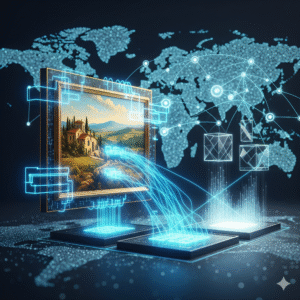
Tokenization of real-world assets (RWA) is the process of converting ownership rights (or cash-flow rights) in off-chain assets like real estate, art, commodities, and private credit into digital tokens recorded on a blockchain.
This isn’t just a DeFi trend anymore. The story is shifting toward regulated issuance, institutional-grade custody, and better settlement rails, because that’s where tokenization becomes genuinely useful rather than just “cool.”
Discover how decentralized networks connect real-world assets in decentralized physical infrastructure networks.
The Rise of RWA Tokenization
RWA tokenization accelerated as blockchain infrastructure improved and capital markets looked for ways to reduce friction in ownership transfer and settlement. A big reason it keeps coming back is simple: traditional assets can be slow to trade, expensive to administer, and hard to access globally.
But here’s the honest version: tokenization doesn’t automatically create liquidity. It improves the rails (transfer, record-keeping, programmability). Liquidity still depends on buyers, pricing, trust, and compliance.
Mechanics and Key Technologies
RWA tokenization usually combines three layers:
- Blockchain layer
- Smart contracts automate transfers and distributions.
- Token standards (fungible or NFT-style) represent ownership or claim structures.
- Data layer
- Oracles connect real-world information (pricing, events, reporting) to on-chain rules.
- Legal + custody layer
- This is the “make it real” layer: custodians, trustees, SPVs, audits, redemption terms.
What is real-world asset tokenization in simple terms?
It’s turning real-world ownership or revenue rights into a digital token so the asset can be issued, held, and transferred more efficiently—with clearer tracking and, sometimes, fractional access.
Applications Across Industries
Real Estate
Tokenization can lower entry barriers through fractional exposure. In many structures, investors aren’t holding “the building” directly; they’re holding a legally defined claim linked to the building (often through an entity).
Does tokenizing real estate mean I legally own part of the property title?
Not always. Many platforms tokenize shares/units in a structure that owns the asset. The key is: what legal rights does the token represent, and how is redemption handled?
Art and Collectibles
Tokenization can help with provenance and fractional participation in high-value assets. Liquidity varies heavily depending on platform credibility and collector demand.
Commodities
Tokenized commodities are most credible when custody is transparent and redemption is clear. For example, Reuters recently highlighted growth in tokenized gold markets while pointing out investor-protection questions around custody, audits, and legal ownership rights.
Intellectual Property
Tokenizing royalties can streamline distributions, but the hard part is enforcing rights, tracking usage, and handling disputes across jurisdictions.
Driving Forces Behind Adoption
A few forces keep pushing RWAs forward:
- Operational efficiency: faster settlement, less paperwork, cleaner audit trails
- Fractional access: smaller minimums (when compliant)
- Institutional demand: tokenized funds and cash-like instruments are easier to standardize
- Regulatory clarity in key regions: compliance expectations are becoming clearer over time
A helpful benchmark: Deutsche Bank Research estimated tokenized real-world assets at around $33B (excluding stablecoins) in 2025, with steady expansion driven by institutional-style issuance.
Challenges and Ethical Concerns
RWA tokenization still has real friction points:
- Regulatory fragmentation across jurisdictions
- Valuation integrity: mismatches between off-chain valuation and on-chain pricing can cause instability
- Security risk: smart contract or custody failures can break trust fast
- Custody and redemption clarity: if redemption is unclear, the token becomes a risk product
- Access gap: technical and compliance complexity can exclude smaller players
What’s the biggest risk with RWA tokenization?
Usually it’s not the blockchain it’s legal enforceability + custody + redemption terms. If those are weak, the token is just a label on risk.
A Critical Perspective
The hype version says tokenization democratizes everything. The real version is more nuanced:
- The strongest RWA models rely on traditional legal enforcement plus new digital rails.
- Without standardized reporting and audits, tokenization can amplify market confusion.
- Technical complexity can recreate the same power structures just with a shinier interface.
The space moves forward when projects prioritize rights clarity, transparency, audits, and investor protections not just token launches.
Become a smarter decision-maker by understanding data-based decision-making pitfalls.
The Future of RWA Tokenization
The most realistic future is not “everything becomes tokenized overnight.” It’s:
- more regulated issuance,
- more institutional-grade platforms,
- more interoperable settlement rails,
- clearer governance and redemption mechanisms.
As tokenized commodities and other RWAs expand, the credibility gap will be defined by one thing: can you prove backing, custody, and enforceable rights during stress? Reuters’ reporting on tokenized gold makes this exact point—growth is real, but investor protections must mature with it.
Broader Implications and Industry Shifts
RWA tokenization is pushing the industry toward:
- better compliance tooling,
- proof-of-reserves expectations,
- stronger custody standards,
- and new settlement infrastructure.
Builders will win by reducing friction without weakening protection. Regulators will influence adoption by clarifying where tokens sit across securities, commodities, and payments frameworks.