Key Takeaways
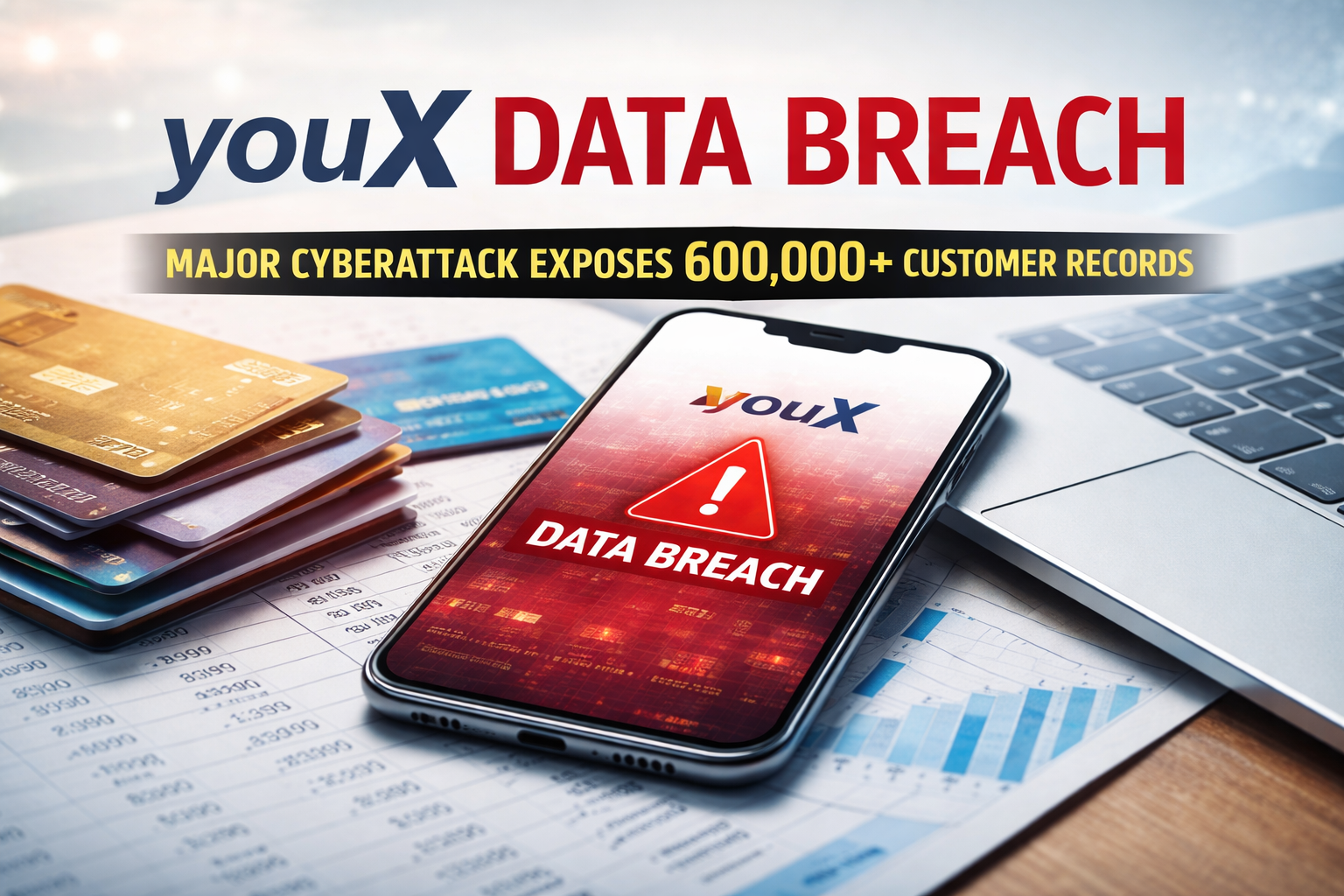
- Over 600,000+ loan applications and personal details exposed in the breach.
- Hacker claims 141 GB of sensitive financial and identity data stolen.
- Data includes driver’s licences, income records, credit details, and loan submissions.
- youX confirms the breach and begins notifying affected parties.
- Incident highlights growing cyber threats within the fintech sector.
The youX Data Breach Fintech News Breakdown
The youX Data Breach Fintech News has rapidly become one of the most talked-about cybersecurity events in Australia’s financial technology space. Australian fintech youX confirmed suffering a significant cyberattack that reportedly exposed 141 GB of sensitive data stored on its loan application platform.
According to the initial report published by DigWatch– the breach stems from unauthorized access to youX’s database cluster, which contained extensive personal and financial documentation tied to loan processing.
What Exactly Was Exposed?
The hacker leaked a preview sample showcasing:
- Full names
- Phone numbers & addresses
- Driver’s licence numbers
- Employment records
- Credit assessments
- Loan application data submitted via nearly 100+ lending partners
This level of detail places thousands of Australians at high risk of identity theft, phishing scams, account takeovers, and targeted financial fraud.
How did the attacker gain access to the youX database?
Initial findings suggest the breach traces back to misconfigured online database clusters that were left accessible without proper authentication layers, enabling direct entry for attackers.
Impact on Customers and Lending Partners
youX collaborate with mortgage brokers, lenders, and credit assessment firms. Because its platform acts as a central data processing hub, a single compromise impacts every connected partner, multiplying the breach’s severity.
Who Is Affected?
- People who applied for loans via brokers using youX’s digital services.
- Borrowers who uploaded ID documents, payslips, or financial statements digitally.
- Lenders connected to youX’s API who shared customer data during assessments.
This widespread effect is what sets this incident apart it is not limited to a single financial institution but to an entire network of fintech operations.
Should individuals who applied for loans through partnered brokers be concerned?
Yes. Even if you never interacted directly with youX, your data may have passed through its platform during a loan assessment process, meaning your details could be part of the exposed dataset.
What youX Is Saying About the Breach
youX has acknowledged the cyberattack and is now:
- Conducting forensic investigations
- Working with cybersecurity agencies
- Alerting affected partners and individuals
- Assisting regulators with compliance obligations
Australian cyber laws require prompt reporting of data breaches, and youX states that this process has already begun.
How This Cyberattack Reflects the Current FinTech Security Landscape
The youX Data Breach Fintech News highlights a painful truth:
Fintech companies remain top targets due to the richness of personal and financial data they store.
Fintech data is particularly valuable because:
- It includes full identity documents (DL, passports).
- Financial histories are easily monetizable on the dark web.
- Loan applicants often provide the most personal and sensitive details.
This breach follows a rising trend of cyberattacks on financial startups, partly due to rapid scaling without equally rapid security hardening.
To understand the broader fraud landscape in fintech, you may also read our detailed analysis on:Fintech Fraud Forbes 30 Under 30 CEO
Why This Incident Matters for FinTech Trust
Fintech thrives on user trust. Any breach, especially of this scale, disrupts:
- Customer confidence
- Partner relationships
- Regulatory perception
- Brand integrity
Borrowers trust fintech platforms with their most sensitive financial life. A single cyber incident can cause ripple effects throughout the industry.
Can this breach lead to long-term identity theft issues?
Absolutely. Exposed driver’s licence details, addresses, income documents, and credit files can remain usable to criminals for years unless affected individuals take corrective steps.
How Individuals Can Protect Themselves After the youX Breach
Borrowers are encouraged to monitor their banking activity, activate multi-factor authentication where available, track credit reports and remain cautious of unsolicited messages asking for financial details. Criminals frequently use leaked datasets to launch tailored phishing campaigns weeks or months later. Those with compromised identification numbers should consider applying for replacements or placing fraud alerts with credit bureaus.
How FinTechs Can Prevent Future Breaches
The youX breach highlights the urgent need for fintech companies to adopt stronger encryption, real-time threat monitoring and Zero Trust access frameworks. AI-driven fraud detection, particularly behavioural anomaly tracking, is increasingly becoming a standard in preventing large-scale breaches. A deeper exploration of AI-led cybersecurity is available in our related feature: AI Fraud Prevention Fintech
Fintech companies must also tighten their cloud infrastructure governance, enforce strict identity access management and regularly audit database configurations to avoid unintended exposure.
What Happens Next in the youX Data Breach Fintech News Story
Investigations are still ongoing, but the expected next steps include:
- Further regulatory intervention
- Class-action discussions
- Improvements to youX’s security systems
- Extended support for victims
Given the scale, the breach could become one of Australia’s largest fintech cybersecurity cases in recent years.
Final Thoughts
The youX Data Breach Fintech News story underscores the growing cybersecurity challenges facing rapidly scaling fintech platforms. With over 600,000+ records exposed, the incident highlights vulnerabilities in digital lending ecosystems and the importance of proactive, AI-driven, and regulatory-aligned security practices.
As fintech adoption rises, strong protection frameworks are no longer optional; they are essential for user trust, compliance, and long-term survival.